

Solutions built for retail's toughest challenges, deployed on 1D/2D barcodes alone or alongside RFID tags.
Solutions built for retail's toughest challenges, deployed on 1D/2D barcodes alone or alongside RFID tags.
The problem: physical counts don’t match system records; short ships, misdirected inventory, administrative errors, and malicious losses. Phantom inventory shows items as on-hand when they aren’t.
→ Each item’s status is validated at the point of sale, so the system always knows whether an item was sold, returned, or still on the shelf. No RFID readers required at POS.


The problem: perishables are tracked by UPC, not by individual unit. Recalls pull entire batches, expired products slip through POS, and spoilage is measured in aggregate.
→ FreshCounts links each item to lot/batch information, expiration dates, PO numbers, ship dates, and retailer data; blocking expired and recalled items at POS and limiting recalls to only what’s affected.
The problem: physical counts don’t match system records; short ships, misdirected inventory, administrative errors, and malicious losses. Phantom inventory shows items as on-hand when they aren’t.
→ Each item’s status is validated at the point of sale, so the system always knows whether an item was sold, returned, or still on the shelf. No RFID readers required at POS.
The problem: perishables are tracked by UPC, not by individual unit. Recalls pull entire batches, expired products slip through POS, and spoilage is measured in aggregate.
→ FreshCounts links each item to lot/batch information, expiration dates, PO numbers, ship dates, and retailer data; blocking expired and recalled items at POS and limiting recalls to only what’s affected.
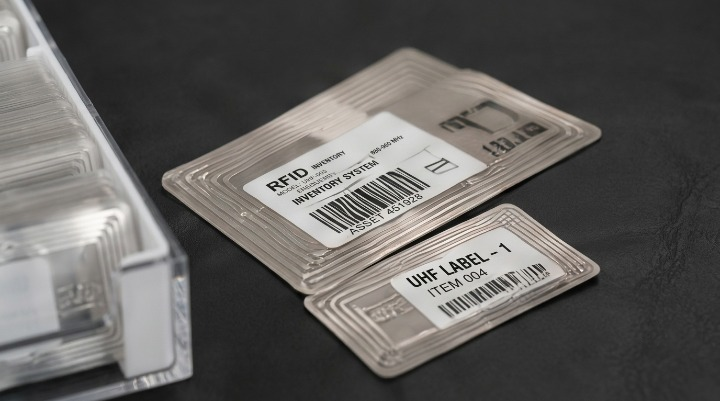
The problem: RFID delivers excellent supply-chain visibility but needs expensive readers at every POS and return counter and can’t validate individual purchase transactions at checkout.
→ DiSa replaces the standard UPC on an RFID tag with a serialized DiSa barcode. RFID handles DC and warehouse scanning; DiSa handles POS validation with a single scan.

The problem: stolen items are returned for store credit, receipts are fabricated, and items come back past the return window. Without item-level tracking there is no way to validate a return.
→ DiSa checks transaction history in milliseconds: never purchased, the return is denied; past the return window, denied; legitimate, approved instantly. 3S Activation (PoSA) keeps electronic products inert until paid.
The problem: physical counts don’t match system records; short ships, misdirected inventory, administrative errors, and malicious losses. Phantom inventory shows items as on-hand when they aren’t.
→ Each item’s status is validated at the point of sale, so the system always knows whether an item was sold, returned, or still on the shelf. No RFID readers required at POS.
The problem: perishables are tracked by UPC, not by individual unit. Recalls pull entire batches, expired products slip through POS, and spoilage is measured in aggregate.
→ FreshCounts links each item to lot/batch information, expiration dates, PO numbers, ship dates, and retailer data; blocking expired and recalled items at POS and limiting recalls to only what’s affected.
| Feature | UPC Only | DiSa Smart Barcode | RFID | DiSa + RFID |
|---|---|---|---|---|
| Unique item ID | No | Yes | Yes | Yes |
| Readable at POS | Yes | Yes | HW needed | Yes |
| Line of sight | Yes | Yes | No | Yes |
| Actionable Intelligence | Limited | Sales/Returns | Inventory | Full validation |
| Improves inventory accuracy | No | Yes | Yes | Yes |
| Enable Targeted Recalls | No | Yes | No | Yes |
| Reduces Returns | No | Yes | No | Yes |
Note: DiSa 3S works with both 1D/2D barcodes as well as with RFID tags.
